
Return on Investment (ROI) and Return on Advertising Expenditure (ROAS) are key metrics that shape businesses’ financial decisions. Marketing expenses are among the most frequently scrutinized expenditures in companies. Return on investment (ROI) can be defined as a financial indicator that measures how profitable an investment is. ROI is particularly used for digital marketing campaigns. While it’s impossible to calculate the return on investment (ROI) for every advertising expenditure a company makes, it is certainly possible to calculate the return on some expenditures.
ROI is known as one of the most common financial indicators used to measure the profitability of an investment. ROAS, which can be translated as return on advertising expenditure, expresses the revenue earned from an advertising expenditure in relation to the amount spent. ROI is calculated using the formula:
ROI = (Net Profit from Investment / Cost of Investment) × 100
ROAS calculation is quite easy. The formula Advertising Revenue / Advertising Expense is used for ROAS. Net Profit / Total Expenses × 100 is the basic approach for ROI. For example, if a company invests 10,000 USD in a digital marketing campaign and earns 15,000 USD, the return on investment is 50%. If you invested 100,000 USD in a company and this investment generated 130,000 USD in revenue, your net profit is 30,000 USD.
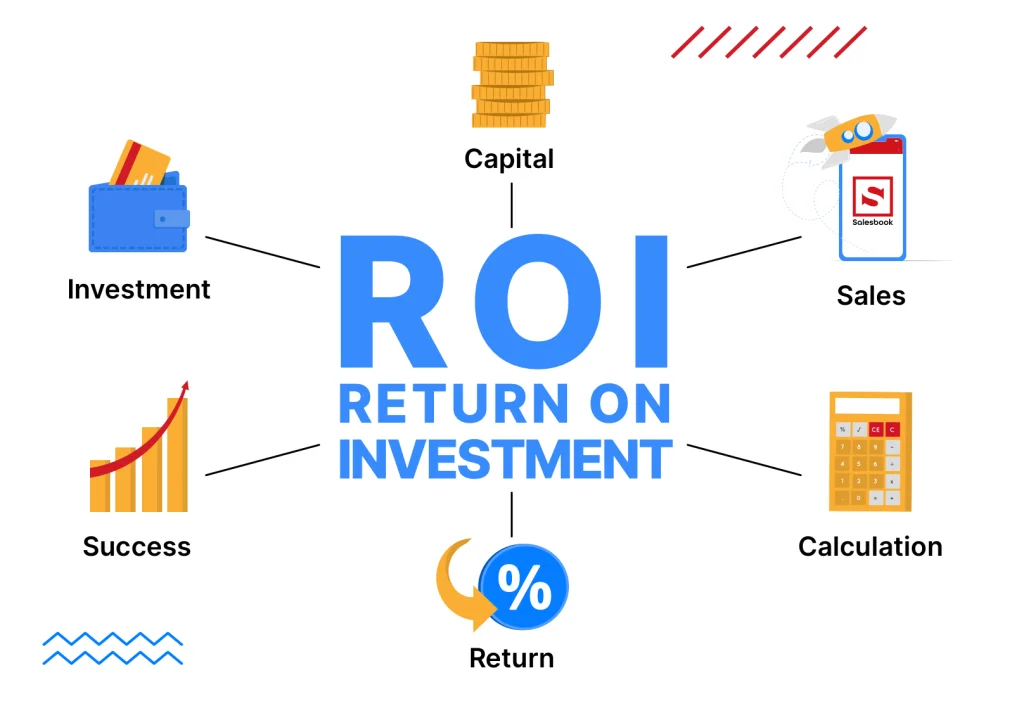
ROI also measures the efficiency and effectiveness of an investment. A high return on investment indicates that the investment is successful and profitable, while a low or negative return on investment indicates that the investment is unprofitable or not sufficiently profitable.
Social media ROI is a measurement that shows the amount of value created by your investments in social media. What is marketing return on investment? ROI is the return on investment (ROI) that the marketing team quantifies to prove the contribution of marketing programs and campaigns to generating revenue for the business. Focusing on increasing the ROI of advertising expenditures can enable the company to do very effective and efficient work, but this method can lead to the brand losing market share. ROI shows whether advertising budgets are being used efficiently.
First of all, just because a marketing expenditure is efficient doesn’t mean it’s a beneficial activity. What is the difference between the ROI metric and ROAS? Return on investment (ROI) measures the total return on an overall investment, while return on advertising expenditure (ROAS) only calculates the return on a specific advertising campaign. Your ROAS ratio can give you important clues about how to manage your advertising. ROAS is calculated with the formula: Advertising Expenditure / Revenue × 100. ROI also shows the risk ratio of the investment. Return on investment (ROI) is a simple but effective financial indicator that measures the efficiency of an investment, showing how much profit an investment generates.
Residual Value = Net Operating Profit – (Investment Amount × Cost of Capital)
The importance of ROI and ROAS calculations for e-commerce companies is significant. In e-commerce, ROI is a metric used to measure the return on e-commerce investments. ROI shows the profitability of the investment. ROI stands for “Return on Investment.” The return on investment is obtained by dividing the cost of the investment by its value. ROI measures the efficiency of investment decisions. Return on investment calculations are an important tool used to evaluate the effectiveness of a business’s investments. ROAS provides advertisers with a crucial metric for evaluating and optimizing their marketing strategies. High ROAS values mean advertisers are earning more revenue for every unit of money they spend.
When calculating ROI, the company’s long-term goals, the sustainability of the investment, and risk factors should also be taken into account. ROI is an important tool for businesses to measure how efficient their investments are.
ROI = (Revenue Generated – Cost of Investment) / Cost of Investment × 100
Tools like UTM codes, conversion tracking, and Google Analytics come into play to identify the right revenue stream. Key metrics used in ROI measurement include CPA, CPC, CTR, and Conversion Rate. Return on marketing investment (ROI) measures how much money your company spends on marketing campaigns compared to the revenue those campaigns generate. The ratio is: cost = revenue ÷ marketing budget spent.
Customer Lifetime Value (CLV) is the total business value your customer provides throughout their entire relationship with your company. ROI is effective for understanding how long it takes for an investment to pay for itself. Return on Investment is an indicator that measures how profitable an investment is. ROI can also be analyzed in social media campaigns and SEO efforts. The return on investment is far more important than sales or short-term visitor traffic. The importance of ROI lies in evaluating the profitability of an investment, ensuring the efficient use of resources, and using it in decision-making processes. Return on investment is one of the most effective calculation tools used to measure the profitability of investments a business is currently making or plans to make in the future.
Reducing costs, conducting competitor analysis, and leveraging market data can increase ROI. ROAS is calculated by dividing advertising revenue by advertising expense. ROI plays a critical role in advertising channels and marketing investments for e-commerce companies. Long-term effects should be considered.