
Ulduzların Yer kürəsindən məsafəsi bəzi fərziyyələr və bir az həndəsi biliklər əsasında hesablanır. Ən məşhur metod "parallaks"dır. Barmağımızı uzaq bir obyektlə uyğunlaşdırıb əvvəlcə sol gözümüzlə, sonra isə sağ gözümüzlə baxdığımız zaman barmağımızın uzaqdakı obyektə nisbətən mövqeyini dəyişdiyini və barmaq gözlərə yaxınlaşdıqca bu mövqe dəyişikliyinin artdığını görürük. Uzaqdakı obyekt istinad kimi götürüldükdə, bu mövqe dəyişikliyi ilə barmağımızın gözlərimizdən məsafəsi arasında triqonometrik bir əlaqə yaranır.
Parallaks, Yer kürəsinin və Günəşin hər iki tərəfindən müşahidə edildikdə, bir ulduzun müəyyən bir bucaq dəyərində fon ulduzlarına nisbətən fərqli mövqelərdə görünməsi kimi təyin edilə bilər. Ulduzların məsafəsini ölçərkən oxşar bir metod istifadə olunur. Əvvəlcə, bizdən məsafəsi ölçüləcək ulduz iki fərqli nöqtədən müşahidə olunur. Daha sonra, iki nöqtə arasındakı məsafədən və ulduzun bu nöqtələrdən göründüyü bucaqlardan istifadə edərək, ulduzun Yerdən məsafəsi hesablanır. Yolda avtomobil sürərkən, sizə daha yaxın olan obyektlərin yanından daha sürətli keçdiyiniz hissini alırsınız. Məsələn, yolun düz yanında bir ağaca və xeyli uzaqda bir dağa baxanda ağac yanınızdan sürətlə keçirmiş kimi görünür, dağ isə demək olar ki, hərəkətsiz görünür.
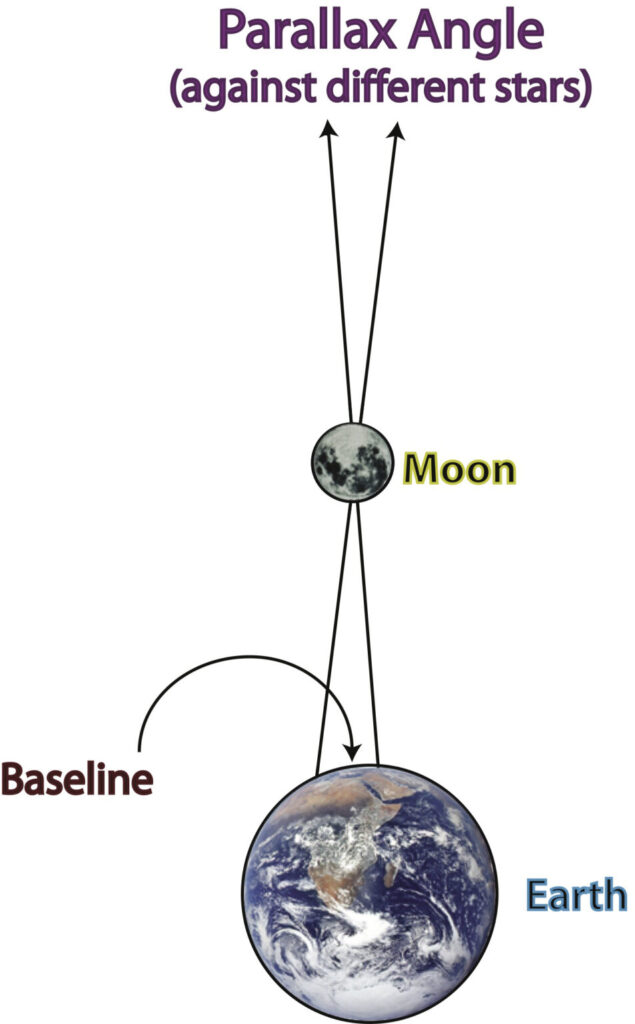
Günəş istisna olmaqla, ən yaxın ulduzlar belə çox uzaqda olduğundan, parallaks hesablamalarında istifadə edilən iki nöqtə arasındakı məsafə mümkün qədər böyük olmalıdır. Buna görə də, parallaks metodu adətən Yer kürəsinin Günəş ətrafında hərəkətindən istifadə edir. Yer kürəsi Günəş ətrafında təxminən 365 gün ərzində fırlanır. Yer kürəsinin Günəş ətrafında bu hərəkəti səbəbindən Yer kürəsi ulduzlara nisbətən bir qədər dəyişir.
İki müşahidə arasında altı ay olduqda, müşahidə nöqtələri arasındakı məsafə təxminən 2 AV-dir ki, bu da müşahidələrimiz arasında əldə edə biləcəyimiz maksimum məsafədir. Yer kürəsinin bu iki mövqeyi arasındakı məsafə 2 AV-dir. Beləliklə, 6 aylıq fasilə ilə bir ulduzun iki təsvirini əldə edə bilərik.
Müşahidələr nəticəsində ölçülən bucaqlar arasında əhəmiyyətli bir fərq əldə edilə bilərsə, ulduza olan məsafə, təpələri Yer, Günəş və məsafəsi təyin ediləcək ulduz olan üçbucağın iti bucağı və buna görə də sadə triqonometrik əməliyyatlar istifadə edilərək hesablana bilər. Körpü nümunəsinə qayıdaraq, triqonometriyanın ulduzlar üçün də istifadə edilə biləcəyini görürük. Parallaks metodu, obyektlərin müxtəlif nöqtələrdən baxıldıqda "yerini dəyişdiyi" kimi görünməsi prinsipinə əsaslanır. Bunu ən sadə şəkildə izah etmək üçün baş barmağınızı göz səviyyəsinə gətirin və uzaqdakı obyektə fokuslanın. Əvvəlcə obyektə bir gözlə, sonra digər gözlə baxın. Baş barmağınız yerini dəyişmiş kimi görünəcək.
Parallaks bucağı kiçik olduğundan, onun vahidi adətən qövs saniyəsi kimi verilir və ulduzların məsafəsi artdıqca bu bucaq tədricən azalır. Parallaks dəyərləri 0,02 qövs saniyəsinə yaxınlaşdıqda ölçmə xətaları görünməyə başlayır və metod etibarlılığını itirir. Lakin, ölçmələr 2 AU məsafəli nöqtələrdən aparılsa belə, bugünkü texnologiya ilə paralaks metodundan istifadə edərək 3000 parsekdən (təxminən 10.000 işıq ili) daha uzaqda olan ulduzlarla aramızdakı məsafəni müəyyən edə bilmərik. Avropa Kosmik Agentliyi (ESA) paralaks metodundan istifadə edərək 3000 parsekdən daha uzaqda olan ulduzların məsafəsini müəyyən etmək üzərində işləyir. Gaia peykindən istifadə edərək aparılan tədqiqatların 1 milyard ulduzu müşahidə etməsi gözlənilir.
1989-1993-cü illər arasında Avropa Kosmik Agentliyi tərəfindən buraxılan Hipparcos peyki paralaks metodundan istifadə edərək 1600 işıq ili məsafədə 118.000-dən çox ulduzun məsafələrini müəyyən etmiş və kataloqlaşdırmışdır. Avropa Kosmik Agentliyi tərəfindən də 2013-cü ildə buraxılan Gaia peyki on minlərlə işıq ili uzaqlıqdakı ulduzları müşahidə etməyə davam edir və qövs saniyəsinin yüz mində biri qədər dəqiqliyə nail olur.
Ulduzların məsafələrini birbaşa ölçmək mümkün deyil. Bizə ən yaxın ulduz belə 4 işıq ili uzaqlıqdadır və bu məsafəni qət etmək mümkün deyil. Ulduzların məsafəsi paralaks metodu ilə necə ölçülür? Bunu hər kəsin başa düşə biləcəyi sadə bir şəkildə izah edə bilsəniz, minnətdar olaram. İndi Günəşə olan məsafəni tapdığımıza görə (bunu başqa bir məqalədə izah edəcəyik), eyni texnikanı digər ulduzlara da tətbiq edə bilərik.
1 Astronomik Vahid (AU) Yer kürəsinin Günəşdən orta məsafəsinə, yəni 149,6 milyon kilometrə uyğundur.
Astronomikada ən çox istifadə edilən uzunluq vahidi işığın bir ildə qət etdiyi məsafəni göstərən "işıq ili"dir. Bir işıq ili təxminən 9 trilyon kilometrdir. Astronomlar tərəfindən üstünlük verilən digər uzunluq vahidi "parsek"dir. Təxminən 3,26 işıq ilinə uyğun gələn bu vahid aşağıdakı kimi ifadə edilə bilər:
Parallaks (π) bucağı müşahidələrdən qövs saniyələri ilə əldə edildiyindən, d(pc) = 1 / π (qövs.san) əlaqəsini əldə edirik.
Bizə ən yaxın ulduz olan Proxima Centauri-nin oxu 768 mas (milliarks saniyə)-dir. Bu, müşahidələr nəticəsində ölçülən sürüşmə miqdarıdır. Lakin, 1000-də 1 nisbətinə görə 0,768 arcsaniyəsi olan arcsaniyəsi dəyərinə ehtiyacımız var. Sadə həndəsi hesablamamızı tətbiq edərək, d=1/0,768 alırıq ki, bu da bizə d=1,3 verir. Lakin, Proxima Centauri bizdən təxminən 4,22 işıq ili uzaqdadır. Nəticənin fərqli olmasının səbəbi, yuxarıda qeyd edildiyi kimi, nəticənin parseklərlə olmasıdır. 1,3 parsek = 1,3 x 3,26 = 4,24 işıq ili. Faktiki məsafə parallaks metodu ilə müəyyən edilsə də, trigonometrik əlaqə ulduzlar üçün də istifadə edilə bilər.
Məsafə ölçmələri gündəlik həyatda asandır; sadə bir xətkeşdən istifadə edərək masanın uzunluğunu asanlıqla ölçə bilərik. Lakin məsafələr azaldıqca və ya artdıqca xətkeşlərimizin dəqiqliyi qeyri-kafi olur. Günəşin Yerdən məsafəsini heç bir xətkeşlə ölçə bilmərik. Kainatdakı məsafə ölçmələri 5 başlıq altında qruplaşdırıla bilər: Günəş sistemi, yaxın ulduzlar, Süd Yolu və yaxın qalaktikalar, digər qalaktikalar və çox uzaq cisimlər üçün. Günəş sistemindəki məsafə ölçmələri radar texnikaları və işığın əks etdirmə xüsusiyyəti istifadə edilərək edilə bilər: Əvvəlcə məsafəsi ölçüləcək cisimə işıq dalğası göndərilir. İşıq cisimə dəyir; onun bir hissəsi Yerə geri əks olunur və beləliklə, əks olunan işıq ölçüləcək məsafəni iki dəfə qət edir. Yaxın ulduzların məsafə ölçmələri üçün parallaks metodu bu tələbi yerinə yetirir.