

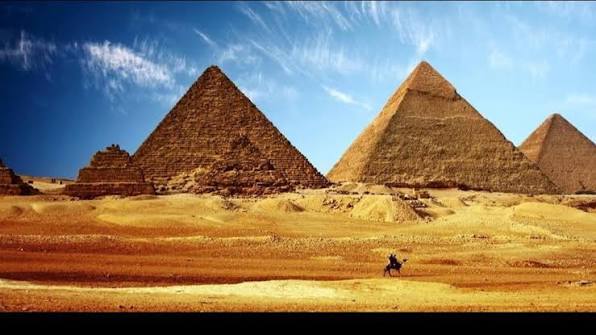
The Egyptian pyramids, with their colossal size, perfect geometry, and enduring mystery even after thousands of years, are one of the Seven Wonders of the World. They fascinate everyone not only with their sheer size but also with the mysteries that remain unsolved even after millennia. The pyramids in Egypt are massive stone structures built in ancient Egypt as tombs for pharaohs. Essentially, they are monumental tombs for pharaohs and their families. Ancient Egyptians believed that pharaohs would unite with the gods after death and attain eternal life. Most pyramids were built as tombs for pharaohs who reigned from the Old Kingdom to the Middle Kingdom. They served as burial places for Egyptian pharaohs from the time of Djoser to Ahmose I. While the Great Pyramid of Giza and many other ancient Egyptian pyramids are enormous structures, none contained treasures as dazzling as Tutankhamun’s tomb. The interiors of the pyramids are largely filled with stone.
The Egyptian pyramids are not hollow; rather, they have a complex structure. Inside the pyramids are the burial chambers of pharaohs and important figures. It is believed that these burial chambers once contained much booty belonging to the pharaohs and their families. At the heart of the Great Pyramid lies the King’s Chamber, constructed from massive blocks of red granite transported 500 miles from Aswan. The King’s Chamber is a large room made of granite blocks, and it houses the pharaoh’s sarcophagus. The smaller, limestone-clad Queen’s Chamber has long puzzled Egyptologists. The Great Gallery is a breathtaking corridor that rises steeply towards the King’s Chamber. The Great Gallery is approximately 47 meters long and 8.5 meters high. The Underground Chamber is rough, unfinished, and eerie. The air shafts are narrow shafts that lead from the King and Queen’s chambers outwards from the pyramid. In another study conducted in 2017, researchers made a groundbreaking discovery in the Pyramid of Khufu using a method called muography. A large void was discovered above the King and Queen’s chambers in the Pyramid of Khufu. While we have no information about what this void is, why it is there, or what might be inside, the research team will continue to explore the interiors of the pyramids using the same method.
The Egyptian pyramids are located on the Giza Plateau, quite close to Cairo. Giza is home to three great pyramids: Khufu’s, Khafre’s, and Menkaure’s. Nearly 150 pyramids have been discovered in Egypt so far. Approximately 118 pyramids have been discovered in Egypt. The Pyramid of Khufu is a massive structure, 145.75 meters high. It was originally about 146 meters high; although it has decreased to 138 meters over time, it is still one of the tallest ancient structures in the world. It is one of the Seven Wonders of the World, and the only one of the Seven Wonders that still stands today. Pyramids are not actually structures unique to Egyptian pharaohs. The oldest pyramidal form, even predating the Egyptian pyramids, is the “Ziggurats.” Many pyramids can also be found in Mesoamerica among the examples of pyramids around the world. How were the Egyptian pyramids built? To be honest, there is still no definitive answer to this question. The Giza pyramids were built using techniques that took centuries to develop. The construction of the pyramids required a multi-stage process.
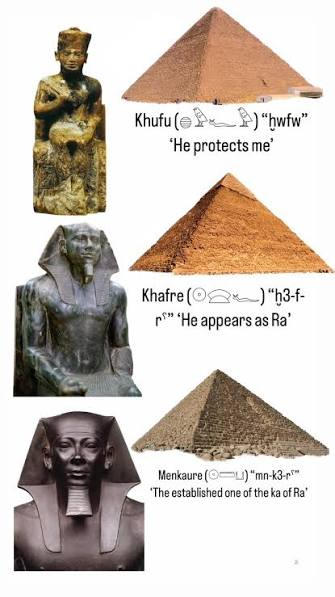
The stone blocks weigh an average of 2.5 tons. Each base side is 230 meters long. It is thought to consist of 2.3 million blocks and weighs almost 6 million tons in total. Researchers are working to understand the advanced and complex planning process of the pyramids. Pharaohs commissioned high-ranking statesmen to oversee the construction of the pyramids. It is noted that the pyramids are perfectly aligned with true north. The front of the sleds was likely moistened with water, which reduced friction and allowed the sleds to move more easily. Little evidence of ramps has survived to the present day, but hypothetical designs of ramps have been proposed in recent years. Scientists note that ancient Egyptian artwork shows water being poured onto the front of the sled.
It may have been built thanks to a long-lost tributary of the Nile River. This tributary is thought to have disappeared thousands of years ago following a massive drought and sandstorms. The Ahramat tributary is estimated to have been approximately 64 km long and 200–700 meters wide. The workers likely lived in simple houses located near the pyramid site. Many archaeologists estimate that more than 10,000 people worked on all three pyramids at Giza. The workers were well-fed. The pyramid texts contained numerous “spells” and rituals. They state that the function of these texts was “to ensure that the deceased becomes an akh, that is, a soul existing in the afterlife.” While the grave goods inside the pyramids were modest compared to later ancient Egyptian tombs, some pyramids had long hieroglyphic inscriptions on their walls. Mysterious massive voids and stones with drawings on them. It is believed that the Great Pyramid of Giza and other pyramids may contain hidden chambers and passages yet to be discovered. New discoveries are being attempted using modern technologies.
The pyramids were seen as sacred structures that allowed the souls of the pharaohs to reach the gods. They were also symbols of union with Ra and life after death. The importance and meaning of the pyramids in Egyptian mythology lies here. The interiors of the pyramids are filled with narrow corridors and passages, leading to burial chambers and other rooms. Visitors can pass through these corridors to see the internal structure of the pyramids and the burial chambers of the pharaohs. Inside, a massive burial chamber awaits you, along with symbolic stones and archaeological artifacts that are sometimes displayed. The stones used in the construction of the pyramids were mostly brought from nearby quarries. Labor, ramps, and natural methods such as water channels were used for transporting and placing the stones. The pyramids were built by paid laborers, not slaves. While the Egyptian pyramids serve as a model of durability, the reason for the short lifespan of modern structures is the changing functions, materials, and design standards. This is found in only a small part of these massive pyramids. However, research suggests that there may be much more to the pyramids.
The Great Pyramid of Giza is estimated to have been completed in approximately 20 years. Construction of the Great Pyramid of Giza, thought to have taken around 20 years, began around 2600 BC, during the 4th Dynasty. The pyramids provide a great deal of information about the culture and life of ancient Egypt. They continue to amaze us with every new discovery. These structures are considered sacred buildings symbolizing the ascension of the pharaohs’ souls to the gods.