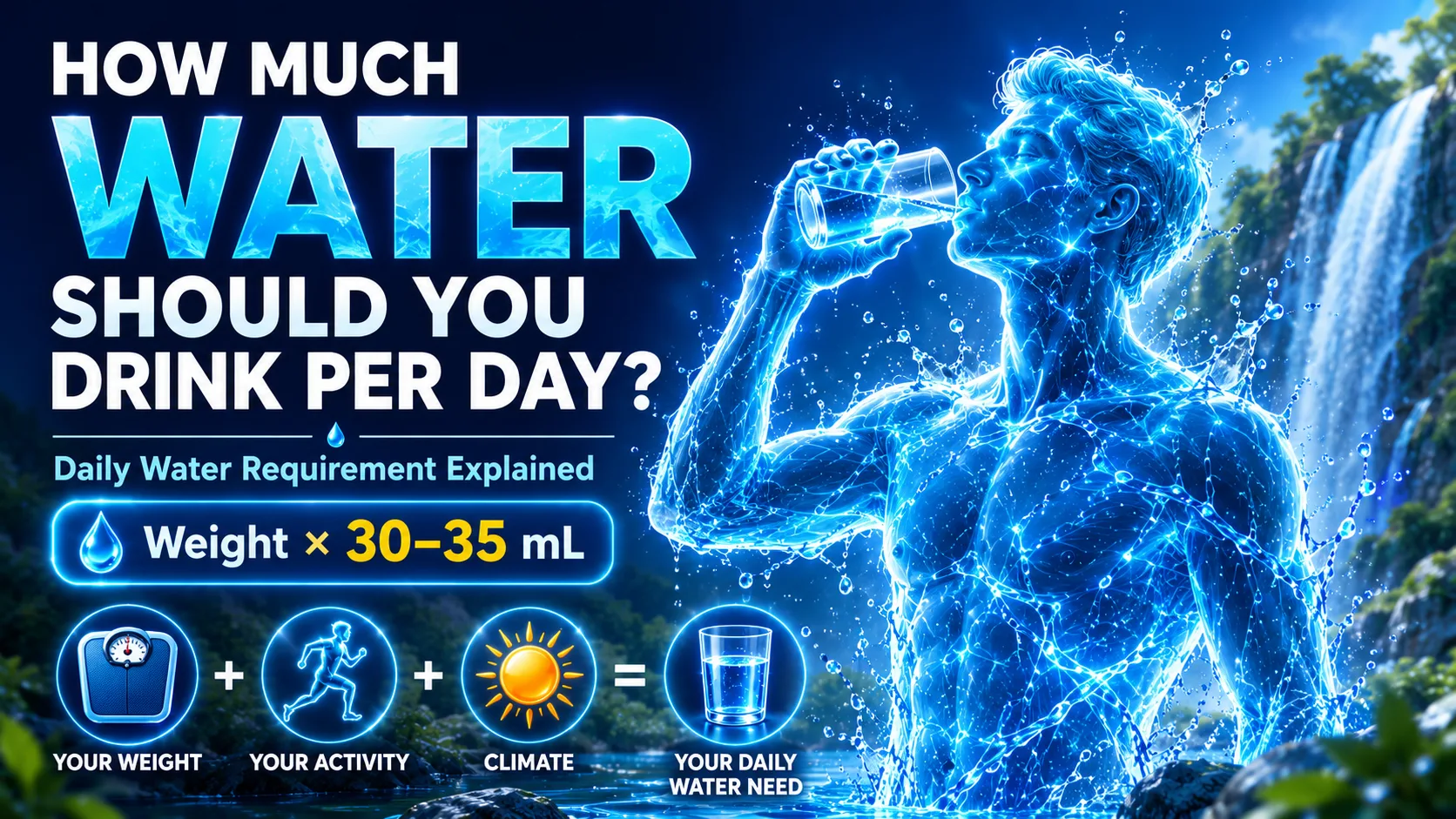
When receiving health advice, people usually recommend "drink plenty of water" first of all. There is no problem here, Water is one of the most important substances for the human body. It is important to drink fluids for the normal functioning of our body, namely blood circulation, digestive system, body temperature regulation, kidney function and cell health. But how much water should a good person drink per day?
This question does not have the same answer for everyone. Because the daily water need can vary depending on a person's weight, age, gender, physical activity, climate, nutrition and health status.
As Hesabla.com, we will explain in detail in this article how the daily water need is calculated and how the daily water need is calculated.
# Why is water important for the human body?
A person loses fluid continuously throughout the day through breathing, sweating, urination and digestion. Accordingly, Water plays an important role in the functioning of the body's basic functions. To replace this lost fluid, it is necessary to drink water.
Do you know why "water" is generally recommended? Because water is a calorie-free drink, but other drinks contain both excess sugar and harmful additives to human health, "Water" is considered the healthiest choice in this section. Even according to the CDC, drinking enough water helps prevent dehydration and support the normal functioning of the body. As we mentioned earlier, since water is calorie-free and does not contain any additives, it is considered a healthier choice than sugary drinks.
In general, water plays an active role in the occurrence of many functions in the human body. For example, it helps the body cool down through sweating, lowering body temperature. It strengthens the digestive system by supporting the breakdown and transportation of food in the stomach. It supports the kidneys by helping to eliminate excess substances through urine. It affects the maintenance of normal blood volume and supports blood circulation. It supports the normal movement of joints in the human body. When a person is dehydrated, conditions such as fatigue and decreased attention can occur. For these reasons, water is not only considered a thirst-quenching drink, but also one of the basic needs for the body to function on a daily basis.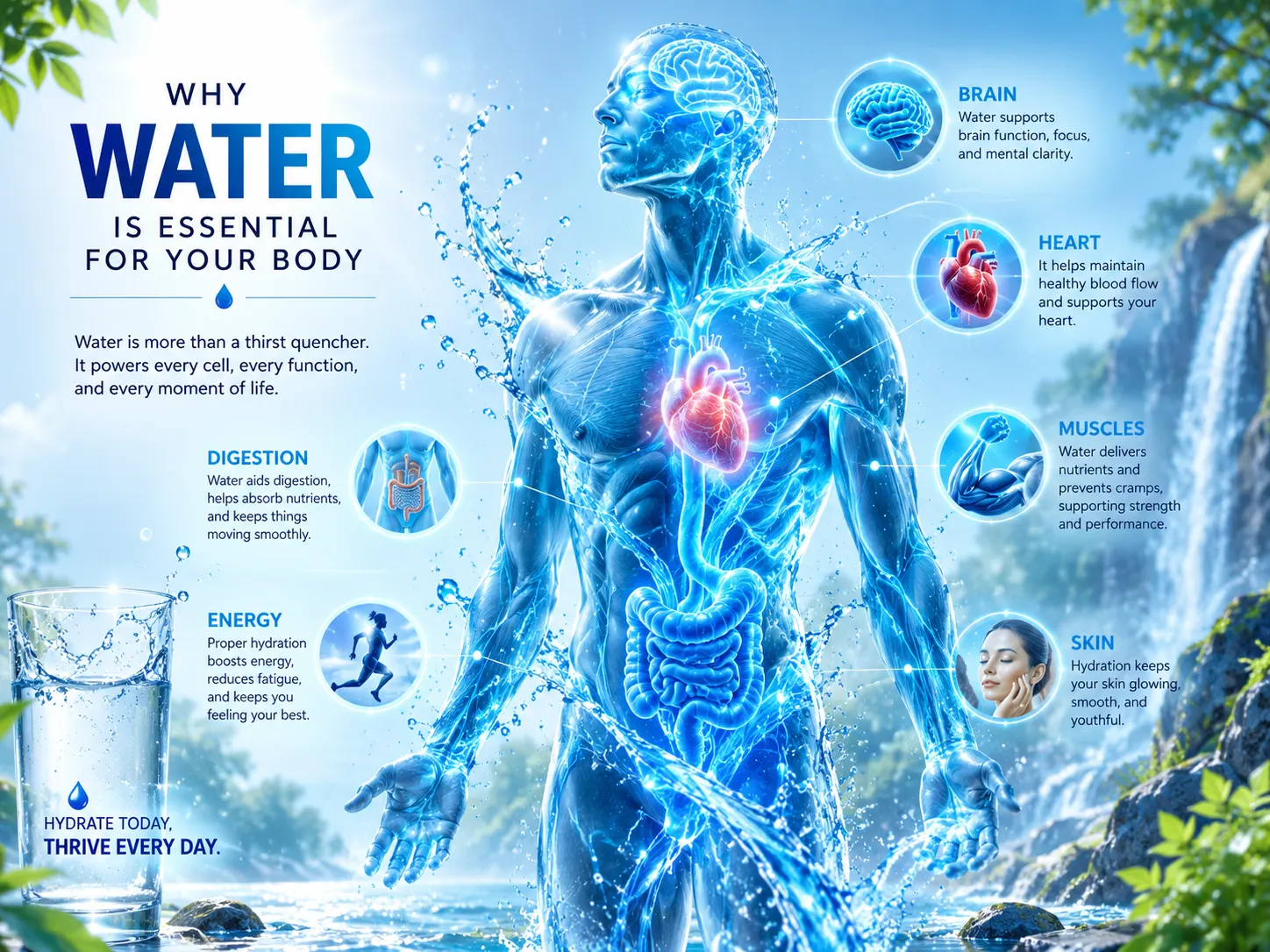
# How is daily water requirement calculated?
One of the most commonly used methods for calculating water requirement is the weight-based approach. Thus, it is noted that the approximate fluid requirement for healthy adults can be calculated as around 30 ml per kilogram of body weight.
However, we should also note that this rule is not an official universal rule. It is simply an approach to estimating a person's daily water requirement. Thus, our formula is as follows:
Daily water requirement = Body weight × 30 ml.
- 50 kg -> 1500 ml
- 60 kg -> 1800 ml
- 70 kg -> 2100 ml
- 80 kg -> 2400 ml
- 90 kg -> 2700 ml
The result obtained in this calculation indicates the approximate daily fluid requirement. This can include not only pure water, but also fluids from food and other healthy beverages.
The Mayo Clinic notes that some of your daily fluid intake also comes from foods, especially fruits, vegetables, and liquid-rich foods.
For example, for a 70 kg person, the approximate requirement is:
70 × 30 ml = 2100 ml
This means that the person’s total daily fluid needs may be about 2.1 liters. If the person works in hot weather, exercises, or sweats a lot, the need may be higher.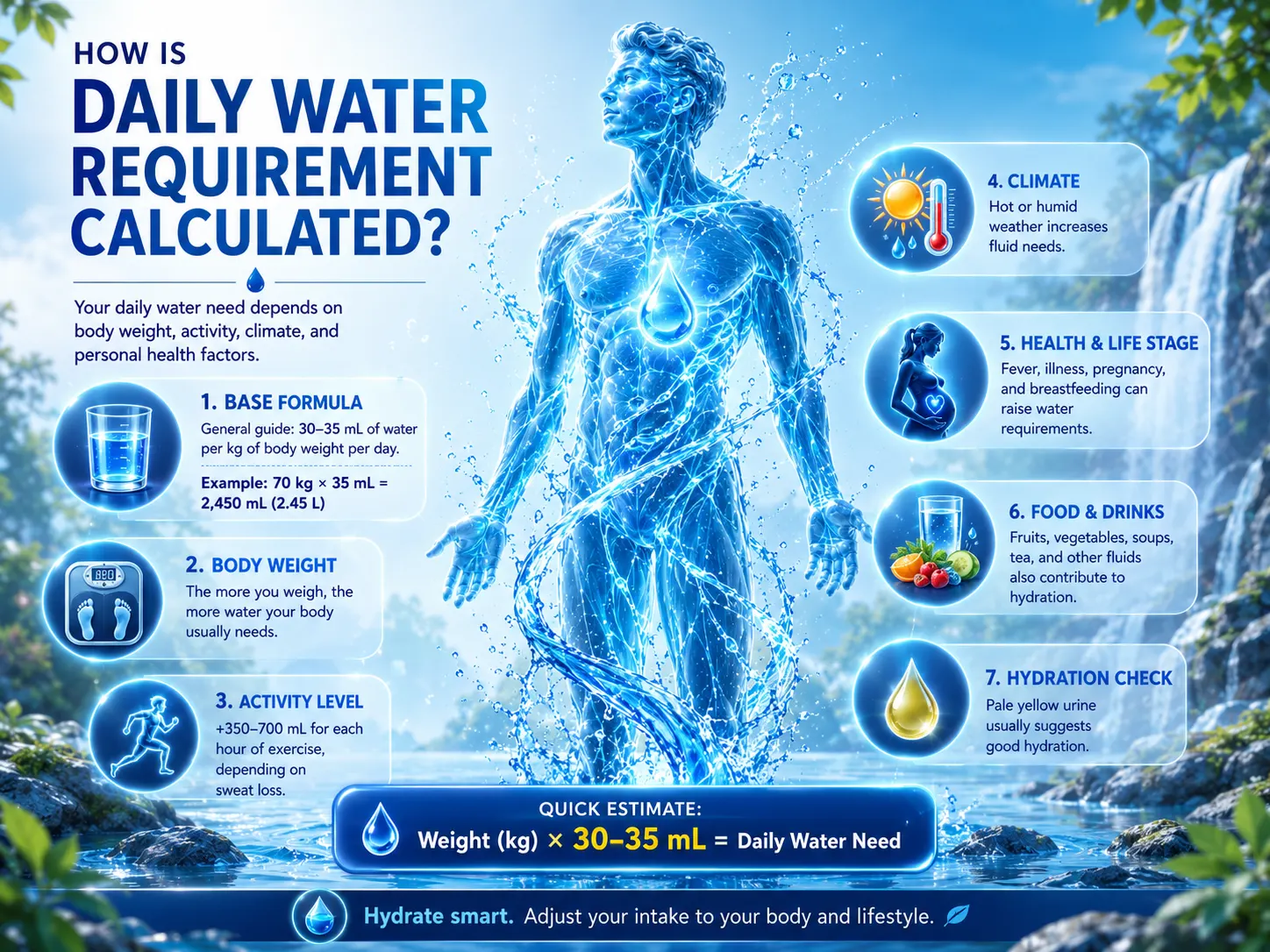
# Key factors affecting water needs
Each person’s water needs are different. Even two people of the same weight may not have the same daily water needs. This is due to lifestyle, climate, nutrition, and health status. Let me explain our point more clearly,
# Body weight
As weight increases, the body’s fluid needs may also increase. A larger body mass means more cells and metabolic activity. Therefore, the water needs of a person weighing 90 kg are not the same as those of a person weighing 50 kg.
# Physical activity
People who play sports or do physical work lose more fluid because they sweat more. Especially during running, cycling, football, fitness or heavy physical work, the need for water increases.
Those who play sports such as combat sports may, but usually coaches in these types of sports do not allow students to drink too much water. Because drinking too much water is harmful in itself. In other words, drinking too much water in a short period of time is not a good approach.
# Weather
The body sweats more in hot and humid weather. At this time, water loss increases. People who work in a hot office or outdoors should consume more fluid than usual during the summer months.
# Nutrition
Salty, spicy and protein-rich foods can increase thirst. At the same time, water-containing foods such as fruits, vegetables, soups and yogurt can meet part of the daily fluid needs.
For example, cucumbers, watermelon, oranges, tomatoes and greens are among the foods with high water content. Although these foods do not completely replace water, they can help with daily fluid balance.
# Health condition
The body can lose more fluid during fever, vomiting, diarrhea and infections. It is common for people who are sick to drink very little water. However, if you drink too little water, especially in such a situation, it will delay your recovery. Even if you become dehydrated in such a situation, you can cause various discomforts. According to the Mayo Clinic, signs of dehydration include intense thirst, less urination, dark urine, fatigue, and dizziness.
However, this is not always a logical decision. For example, increasing water intake may not always be right in cases of kidney disease, heart failure and some other medical conditions. In such cases, you should definitely rely on your doctor's advice regarding the amount of daily fluid.
# Pregnancy and breastfeeding
Pregnancy is also included in the list of exceptions. During this period, the need for fluids may increase, as drinking plenty of water during this period plays an important role in both the mother's health and overall fluid balance. However, since individual needs can vary, a doctor's advice is a much more accurate approach in such cases.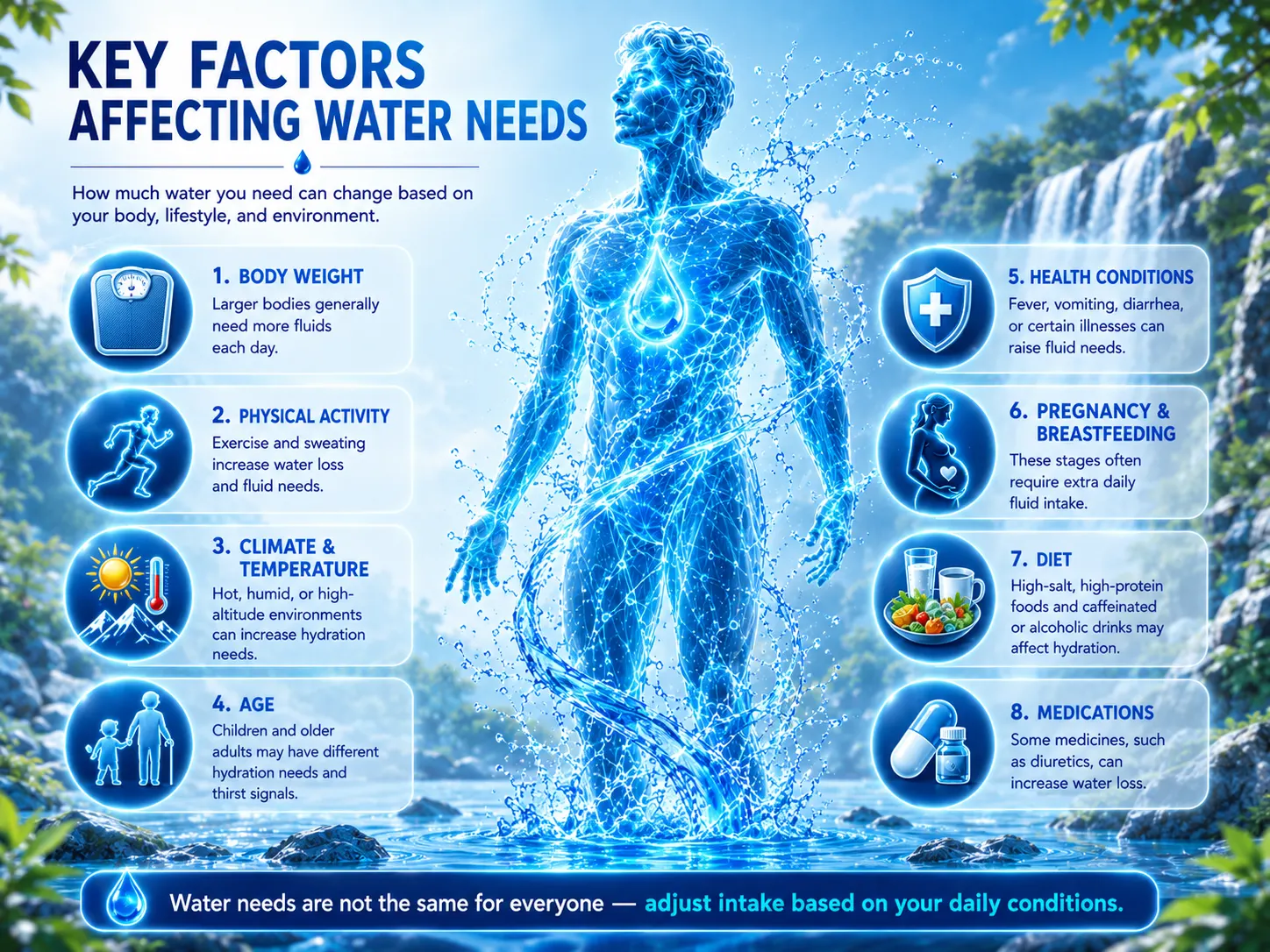
# Main symptoms of thirst
Slight thirst may occur when the body does not receive enough fluids. This can be accompanied by fatigue, headache and decreased attention. In more serious cases, symptoms such as dizziness and very little urination may occur.
Thus, the most common symptoms are Thirst, Dark urine, Headache, Fatigue, Dry mouth, Dizziness
However, if you have conditions such as diarrhea, vomiting, high fever or inability to retain fluids, it is strongly recommended that you contact your doctor directly.
# Does urine color really indicate a need for water?
One of the simplest ways to monitor your water needs in everyday life is to look at the color of your urine. According to the NHS, the approach is as follows,
- Light yellow -> Usually normal fluid balance
- Dark yellow -> More water may be needed
- Very dark -> There may be a risk of dehydration
- Completely clear -> Sometimes it can indicate excessive fluid intake
However, this method is not a complete medical diagnosis. It has been found that some vitamins, medications and even foods can change the color of urine. In this case, this method is just a practical indicator for daily observation. However, if you have symptoms such as dark urine, pain, swelling or constant thirst, the best advice for you would be to consult a doctor.
# Is drinking too much water harmful?
Although water is essential for health, drinking too much water is also not right. Drinking too much water, especially in a short period of time, can disrupt the electrolyte balance in the body. This can be a risk especially during long-term sports competitions or bad habits that force you to drink a lot of water. Therefore, it is better to drink water evenly throughout the day.
However, as we have mentioned before, this is not always a logical decision. For example, in cases of kidney disease, heart failure and some other medical conditions, increasing water intake may not always be right. In such cases, it is necessary to rely on the doctor's advice regarding the daily amount of fluid.
# As Hesabla.com, our recommendations regarding the habit of drinking water
As we have mentioned before, meeting the daily water requirement is very important. As Hesbla.com, we will give you some recommendations regarding this in this section. Taking small steps during the day in particular will be very important for you to form a habit.
So, starting the day with fluid intake, i.e. drinking water in the morning, keeping a glass of water or a water bottle with you at all times, drinking water instead of unhealthy sugary drinks with meals, drinking water before and after exercise to replace the fluid lost through sweating during exercise, and using apps on your phone that will alert you when it is time will be a serious help in creating a habit of drinking water.
The NIH lists drinking water without waiting for thirst, especially with meals and before, during and after physical activity, as practical hydration tips.
# Frequently Asked Questions
- How many liters of water should a person drink per day?
This varies depending on a person's weight, age, activity level, and health status. Official recommendations state a total daily water intake of 3.7 liters for men and 2.7 liters for women, but this figure also includes fluid from food and other beverages. However, as a general guideline, we can still recommend between 1.5 and 3 litres of water.
- Is the 8-glass rule true?
The 8-glass rule is a general recommendation that is easy to remember, but it is not an exact rule for everyone. The NHS recommends 6-8 glasses of fluid per day as a practical guideline for most people, but this can vary depending on factors such as weight and age.
- Do tea and coffee count as water needs?
Liquid drinks can be included in the daily fluid intake to some extent. However, sugary drinks, energy drinks and high-calorie drinks are not recommended as the main daily fluid source. The best choice is to drink plain water.
- Should a person who exercises drink more water?
Yes. Sweating increases during exercise and the body loses fluid. Therefore, it is important to drink water before, during and after exercise. Electrolyte needs may also arise during prolonged and intensive exercise, but this is not necessary for everyone, it would be advisable for those who take such supplements to consult a doctor before taking them.
- Can you know the need for water by the color of your urine?
Partially yes. Light yellow urine can usually indicate normal fluid balance. Dark urine can be an indicator of the need for more fluid. But here there is a case where medications, vitamins and some foods can change the color of your urine. Therefore, we cannot say that this method is a completely accurate answer to the prediction.