The Apollo 11 Moon landing was watched around the world in July 1969, but some people still claim that humans never stepped on the Moon. These claims usually mention the flag, the lack of stars in the photographs, radiation belts, or the idea that the videos were made in a studio. However, the articles point to scientific, photographic, and historical evidence showing that the Moon landings really happened.
The event took place in the context of the Space Race between the United States and the Soviet Union. The Soviet Union had earlier sent the first satellite, the first man, and the first woman into space, while the United States decided to send the first human to the Moon. After years of work, Apollo 11 reached the Moon, and on 20 July 1969 Neil Armstrong and Buzz Aldrin became the first people to walk there.
One of the strongest pieces of evidence is the photographic record of the landing sites. NASA’s Lunar Reconnaissance Orbiter has photographed Apollo landing areas, showing the remains of the lunar module, traces left on the surface, and even shadows from the flags. Other countries’ spacecraft, including India’s Chandrayaan-2 and China’s Chang’e-2, also photographed Apollo landing areas and recorded details matching the Apollo images.
The Apollo astronauts also left scientific equipment on the Moon. Laser retroreflectors placed by Apollo 11, Apollo 14, and Apollo 15 are still used to measure the distance between Earth and the Moon. These reflectors have been used not only by American scientists, but also by Soviet and Chinese researchers. Apollo missions also left scientific instruments such as seismometers, and these instruments sent data back to Earth for years.
The Moon rocks and soil samples are another major proof. Apollo missions brought hundreds of kilograms of lunar rocks and regolith to Earth, and these samples were studied by laboratories around the world. Their structure and composition are different from ordinary Earth rocks, and some of the oldest lunar rocks are around 4.5 billion years old.
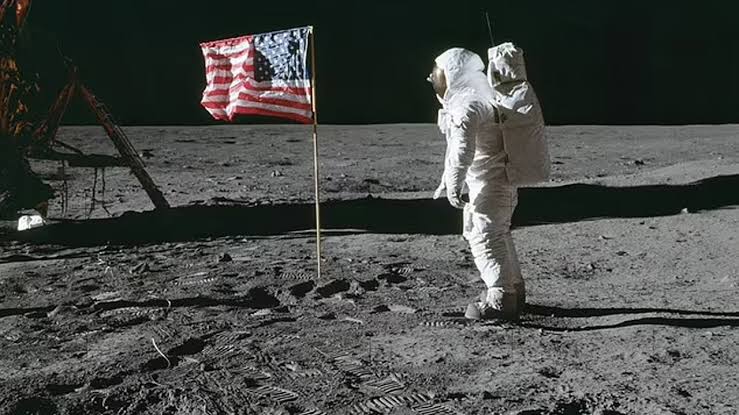
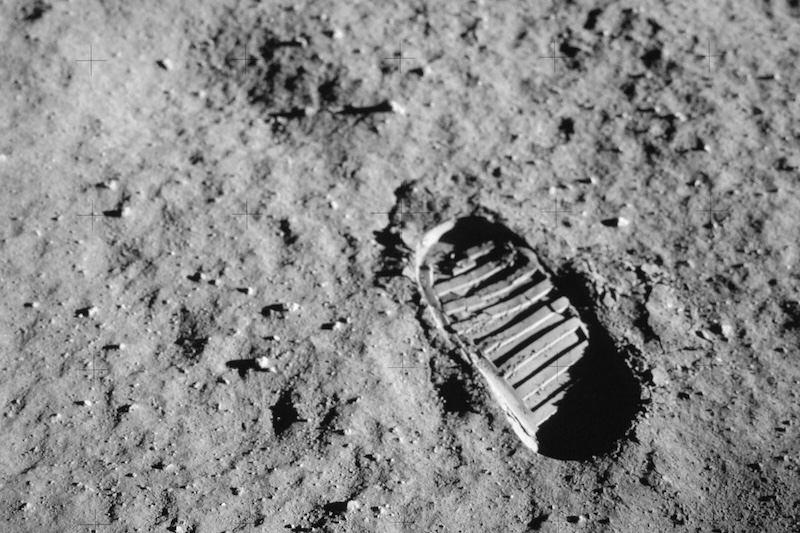
The common visual objections also have clear explanations. The flag appeared to move because it had a horizontal support rod and was affected by the astronauts’ movement, not by wind. Stars do not appear in many photographs because the bright lunar surface required camera settings that did not capture faint starlight. Footprints can remain on the Moon because there is no atmosphere, no wind, and the surface is covered with fine regolith.
Radiation was also a real concern, but the Apollo astronauts did not spend enough time in the strongest parts of the Van Allen belts to receive a fatal dose. The spacecraft route and protection reduced exposure. Claims that a leaked WikiLeaks video proves the landing was fake were also checked by Teyit, which reported that the images were edited and that WikiLeaks had not published such a video.
The Soviet Union had both the ability and the political motivation to expose a fake Moon landing, yet it did not do so. Soviet specialists followed the Apollo missions, and many foreign observatories and radio listeners also tracked signals from the missions. Together, the photographs, lunar samples, laser reflectors, scientific instruments, and independent tracking make the conclusion clear: humanity really went to the Moon.